
Key Takeaways
- Therapy often begins right after surgery, with about three sessions each week plus exercises at home.
- Most rehab timelines span six to twelve weeks, depending on your goals and starting point.
- Therapists might tend to range of motion and balance first, then come work with leg strength.
- Activity before surgery, balanced meals, and real rest all support steady progress.
- Driving can return in one to four weeks, and low-impact hobbies often resume near 3 months.
Why Rehab Shapes Your Hip Replacement Recovery
There’s a calendar full of things you’d rather be doing than sitting with your leg propped up. A garden may need tending, or the grandkids may want to go to the nearby park. A new hip is supposed to help with your daily life, not get in the way of it. Recovery in Juniper Communities is built around that idea. We believe short-term rehabilitation should be shaped by the life you want to get back to.
Rehab can speed up hip replacement recovery. Guided movement rebuilds the balance and strength you need to move freely. And the steady work starts paying off sooner than most people expect.
What Rehab Looks Like After a Hip Replacement
Therapy often starts within hours or a day of surgery. Someone helps you stand, take a few steps, and get comfortable moving again.
Physical therapy for older adults keeps mobility and daily independence front and center. You can expect roughly three therapy sessions a week. These sessions are often paired with exercises you do on your own between visits. The full timeline commonly spans six to twelve weeks.
Where Rehab Can Happen
You have options. And the right one depends on your home setup, your support system, and how much help you’d like initially.
- A short-term rehabilitation setting, where therapy and daily support sit just down the hall
- Therapist visits at home, which keeps you in familiar surroundings
- Outpatient sessions, which give you access to more equipment
Some people move through more than one of these. A few weeks of short-term rehabilitation followed by outpatient visits is common. Planning the hospital transition early can smooth out the process significantly.
How Movement and Exercise Support Faster Progress
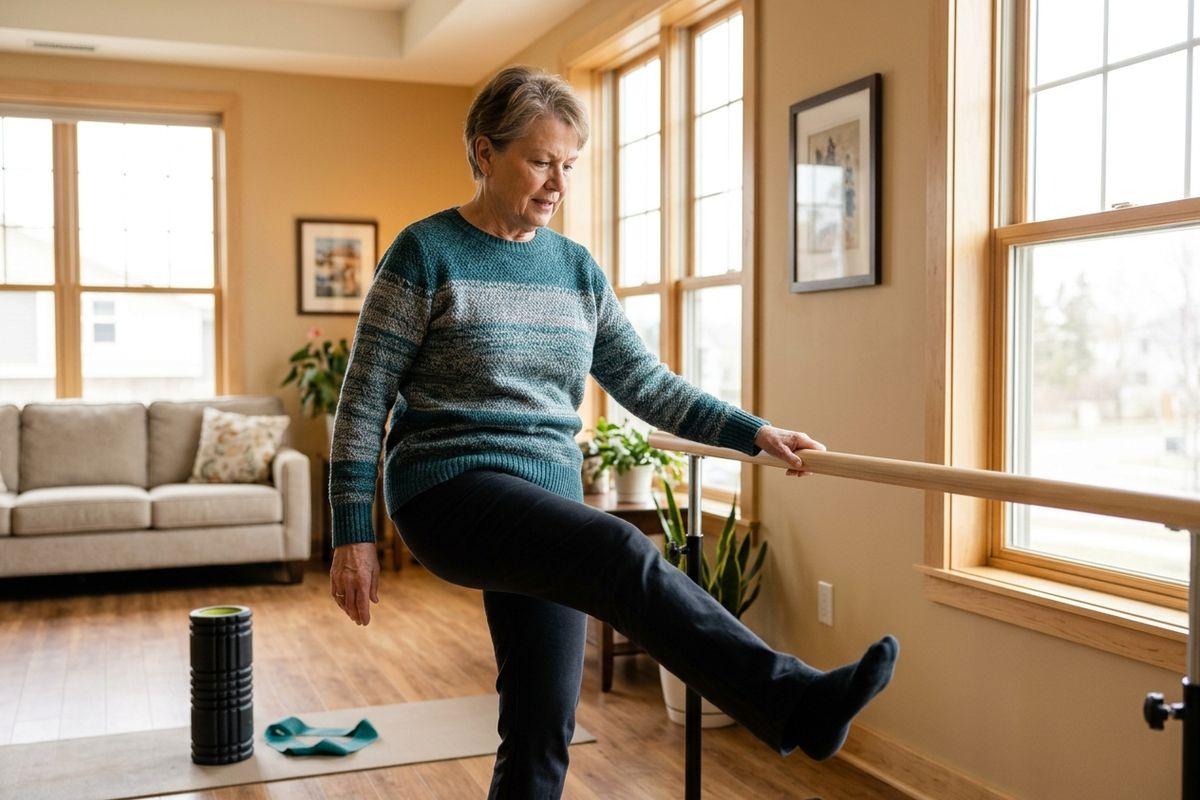
You cannot walk steadily across a parking lot before you feel planted while standing still. That’s why therapists tend to start by working on range of motion and balance first, then layer on the rest. Some of the simple balance exercises for older adults can often be carried over into your home routine.
Next comes strength, especially in your glutes and legs. The muscles in your legs support your new hip through every step. Small gains stack up. By week 6, you’ll likely notice things you couldn’t do at week 2.

Everyday Skills You’ll Practice
Rehab isn’t only about exercises. A good portion of it looks like ordinary life, practiced with intent.
- Rising from a bed or a chair without hesitation
- Taking stairs one step at a time
- Sliding in and out of a car
- Short walks that get a little longer each time
What Helps Speed Up Hip Replacement Recovery
If surgery is still ahead of you, know that prehab helps. Staying active in the weeks before your procedure can support how quickly you recover afterward. Even short daily walks count. Try reading up on exercise and physical activity before the surgery.
Proper nutrition plays a critical role in recovery. Balanced meals with protein and key nutrients help your body heal. You can learn more about healthy meal planning to make prepping easier.
Rest between therapy sessions belongs on the list as well. Using cold compresses and elevating your leg can help when swelling shows up.
When You Can Get Back to Normal Life
The path of recovery looks different for everyone. But typically, progress from a walker to a cane sometimes happens within the first week. Driving normally returns somewhere between four and six weeks, depending on which side had surgery. Desk work often resumes around two weeks, while physically demanding jobs can take longer.
Hobbies, Sports, and Travel
Low-impact favorites tend to come back first. Walking, cycling, and swimming often land near the three-month mark. Higher-impact exercise would usually have to wait until after six months. The numerous benefits of walking make it an easy choice as the hobby to first reclaim.
Travel plans could benefit from a little extra planning, especially if long flights or lots of walking are involved. Plenty of people could go back to trips before the year is out.
Pain and Sleep Questions
Some swelling and soreness are expected, particularly after a busy therapy day. Many people find that soreness eases noticeably by around 12 weeks. However, some normal aches and pains may linger.
Sleep can be tricky in the early weeks. Ask your therapist which positions work with your new hip. And use pillows the way they suggest.
Recovery with a Community Behind You
Recovery goes smoother when you’re not managing every detail yourself. At Juniper Communities, short-term rehabilitation puts therapy close by. Getting to a session takes a short walk rather than a drive. You are supported with meals, housekeeping, and steady encouragement. You also get personalized fitness support once you’re ready for more.
Plans get built around your goals. It could be returning to your bowling league or that walking path near your house. You can start by reaching out to us, visiting our communities, and seeing how the space feels. We’re here to support you on the journey of health and mobility.